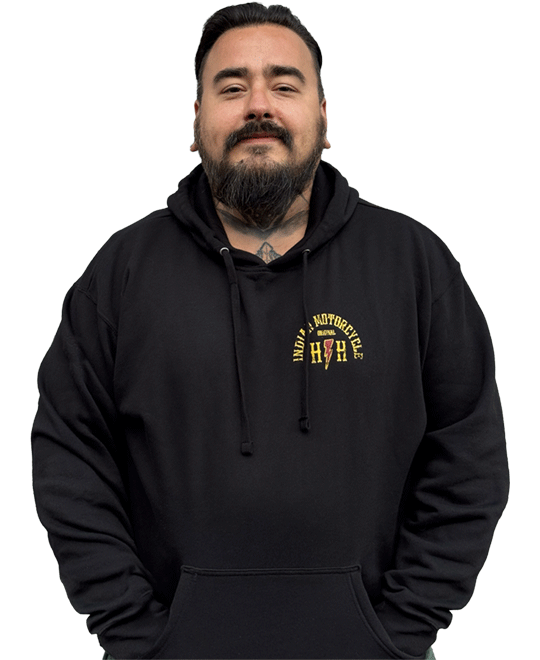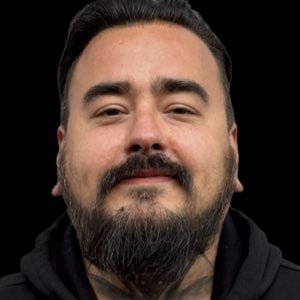
The first tattoo shop Guilherme Assumpção ever saw was a record store.
He grew up in a small town in Brazil, the kind of place with one tattoo artist, and that one didn't even live there. He traveled in, set up inside the local record store, and tattooed whoever came through the door. Guilherme was about fourteen.
He would sneak in to watch.
"I was very interested in what the hell he was doing. Especially because it was inside a record store, and I love music too. Interesting people, music, making art. I was like, man, this is something I want to do."
He had a head start. Since around twelve, he'd been drawing on his classmates' hands with a pen. A year or two later came his first tattoo, a stick and poke. He was attending a Catholic school run by nuns at the time.
"They didn't like that at all."
Back then it was just fun. These days he has a better answer for why skin beats paper.
"If you paint something and give it to someone, they put it in their house. Whoever comes to the house sees the painting.
When you give someone a tattoo, they can literally hold your painting everywhere they go, around the world, showing people. 'Oh, look at this.' That's kind of cool."
His dad wanted him to have a degree first, so Guilherme left home for São Paulo and went to college for art. Then he came to the U.S., found a mentor in Florida, and started his apprenticeship.
The mentor was old school. Not always easy to be around, but the two of them got along fast. Fast enough that Guilherme moved in. For a year and a half, he slept in the shop and showered at the beach.
"I was pretty much homeless for that time, but it was great. It wasn't a struggle. It was awesome."
The hard part wasn't the living situation. It was the English. It wasn't his first language, and the people coming through the door didn't make it easy.
"Everybody that came to the shop talked like they slurred. It was hard for me to understand them."
What he took from those years was simple.
"Be patient. Be patient with everything. With the clients, with the process. Sometimes you get stuck at one point and it doesn't get better, and you get frustrated. Just be patient."
Twenty-five years in, he says he never once wondered if he'd picked the wrong thing.
"This is what I want to do. This is what I love. And it's what I'm going to do until the day I die."
He talks about tattooing like something much older than any shop. People have been marking their bodies since the Stone Age, and to him the reason hasn't changed much.
"It's like putting on a nice shirt. You adorn your body. You put on stuff that you think can make you look better, make you feel better. Sometimes it's just for the sentimental purpose. Sometimes it's the weird stuff that only you know what it is."
The industry is another story. He watched a wave of new artists pick up machines after COVID, and he's watched a lot of them fall off since.
"The industry doesn't work like that. You have to have the passion."
His own work started with a love of surrealism, which turned out to be hard to put on skin. All those small details don't last.
Color realism had a similar problem.
"When you do a very detailed color tattoo, all those little differences in tones get lost over time. The tattoo changes a lot.
I'm drawn more to black and gray now because I like the way they age, the way they look."
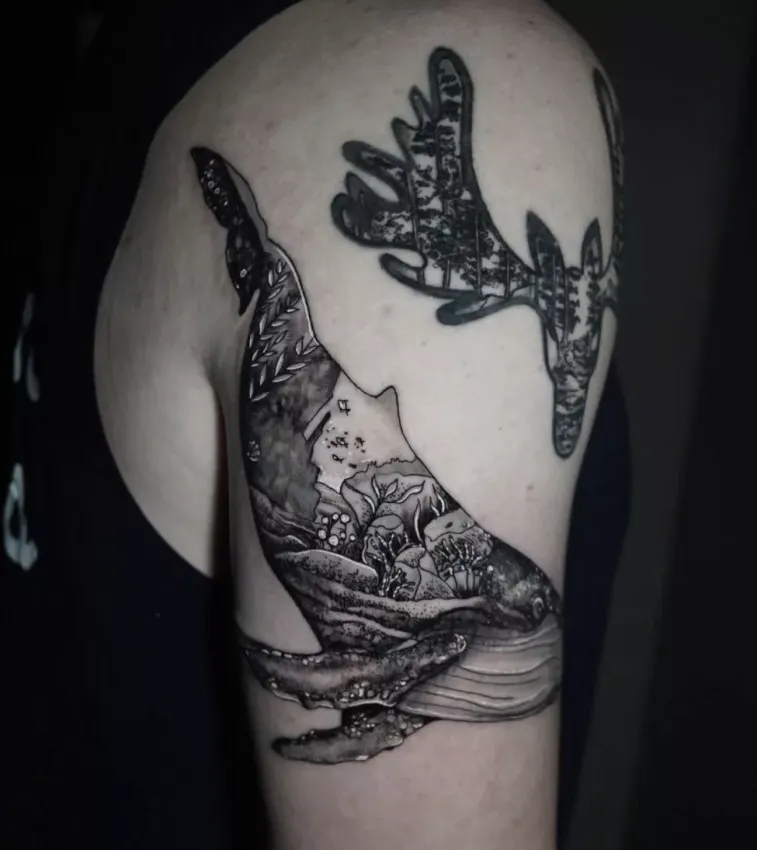
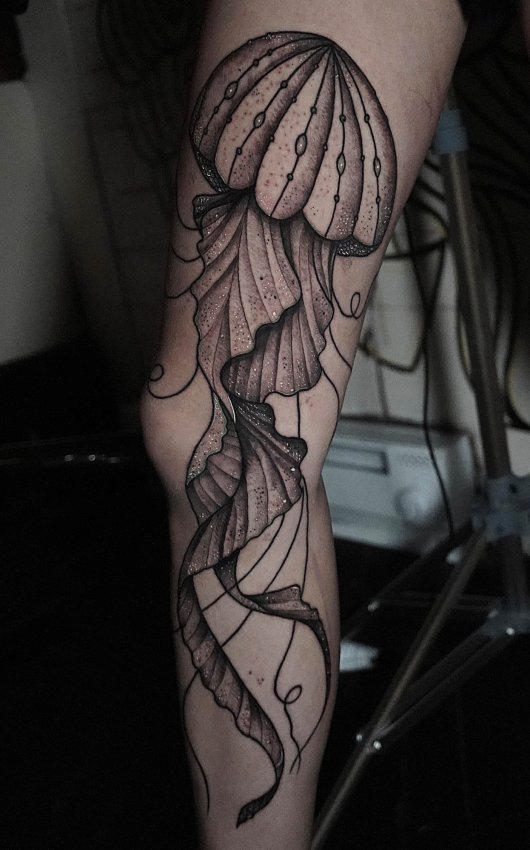
So he moved toward realism with an illustrative take: bolder lines, lighter shading, built to hold. The surrealism found another way in. He likes to take a silhouette, an animal or a half-finished shape, and use it as a frame for a whole scene inside. A whale with a coral reef in its body. Animals and nature mixed with machinery. Organic and mechanical in the same piece.
"It's easier to read. You see a whale, and then you look closer. What's inside? Oh, that's a whole underwater scene."
A lot of that comes from his second favorite thing to do. In his San Francisco apartment, he kept around two hundred plants, grown every way he could think of.
"Dirt, hydroponic, aeroponic, everything you can imagine."
He's working on a new garden now, and when he needs to get inspired again, that's where he goes. The colors. The shapes. The way things grow. And the thing underneath all of it.
"How long plants take to grow, why they grow. How long tattoos last, how the ink migrates on the body, how they change over time with the sun. How time affects everything. I love the concept of time."
He points his camera at galaxies, too.
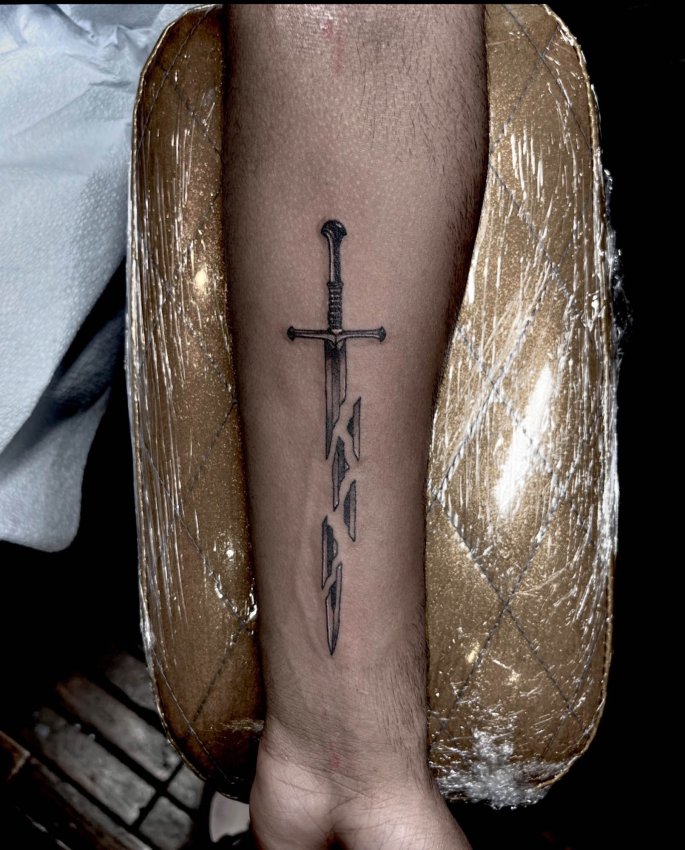
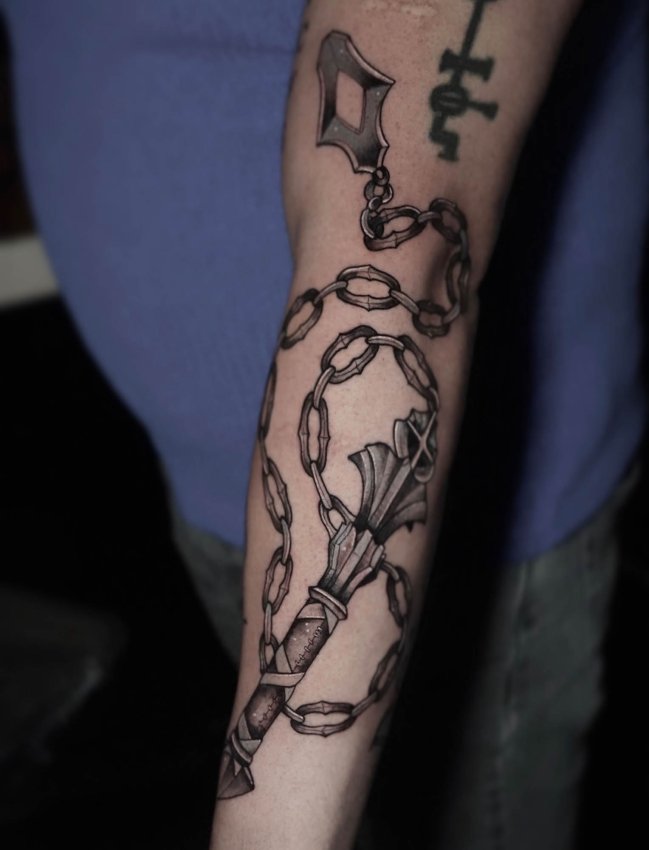
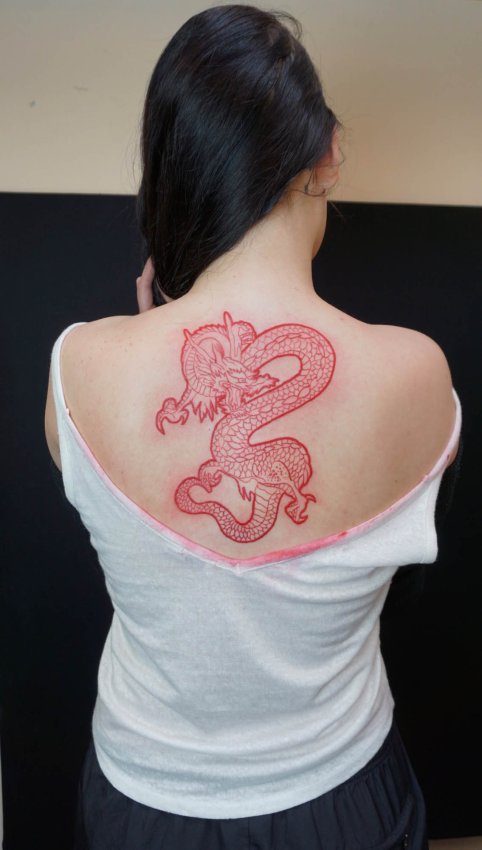
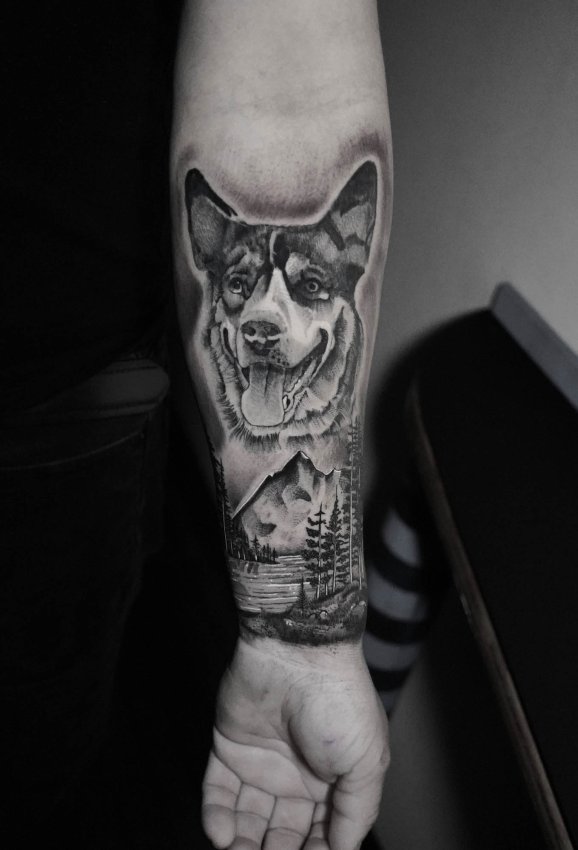
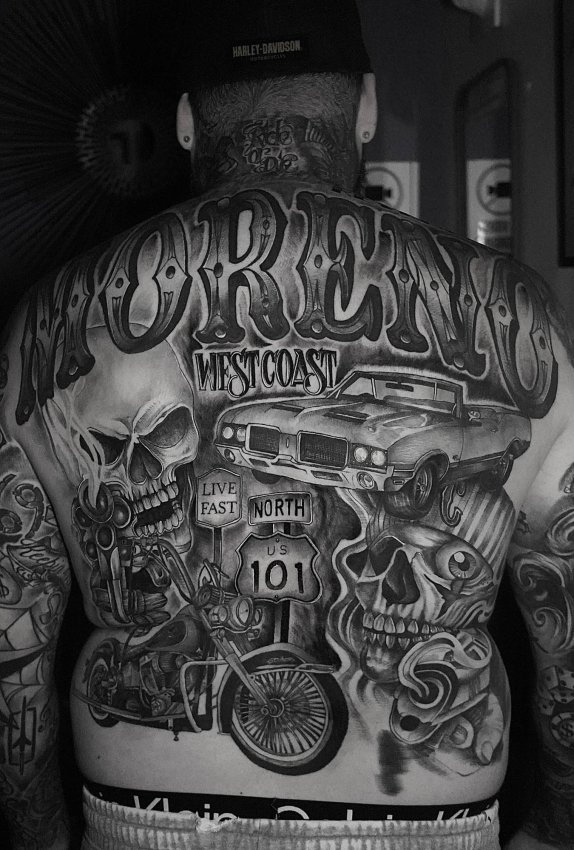
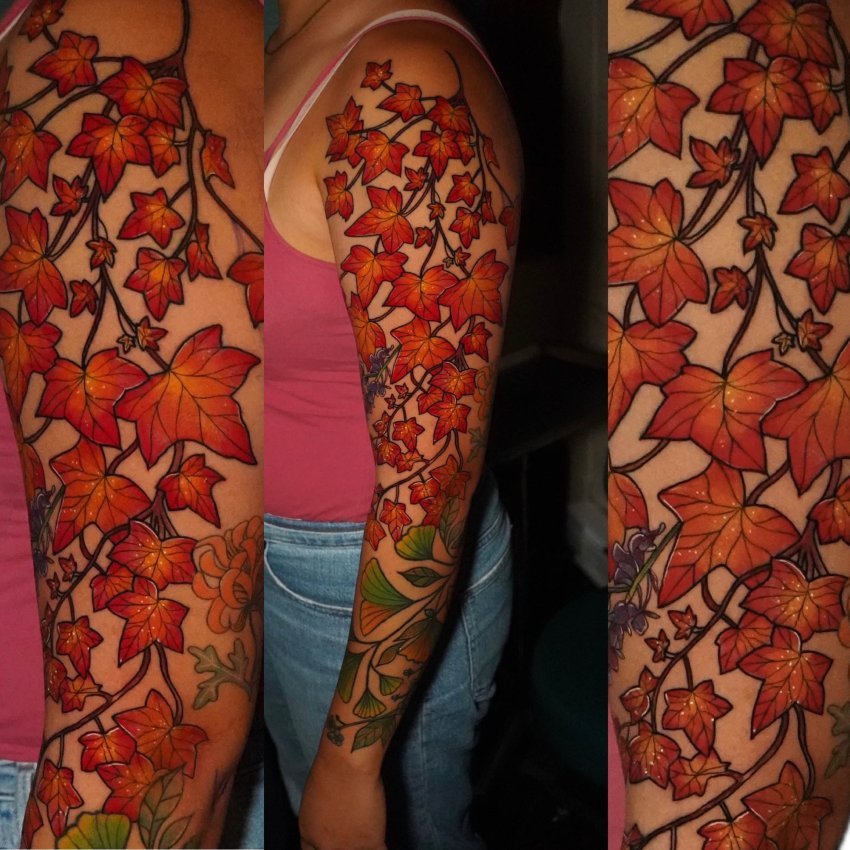
Years of watching people see their tattoos for the first time has taught him not to read too much into the reaction.
"Sometimes you work on a whole sleeve for days, and the person is like, 'Oh yeah, that's cool. Thanks.' And they go. And sometimes you do one tiny little name, and they start crying in the mirror."
He doesn't take the quiet ones personally.
"It doesn't mean the other person didn't like it. They just don't know how to express themselves, or they don't like to express themselves that much."
He first walked into Hart & Huntington around 2010, at Universal.
"I was like, what the hell is a tattoo shop doing here?"
He looked around, didn't talk to anyone, and left. A couple of years later, a friend guest spotting with him in Jacksonville brought him back. This time Guilherme talked to the crew and heard about the owner.
"I was like, oh shit, it's a motorcycle guy. Motorcycles, theme parks. I love both. I want to work here."
It took a while longer. In 2016 he moved to San Francisco and loved it. Great city, great people, too cold. So he asked himself what he really couldn't stay away from in this country. The answer was theme parks. Orlando had those, plus the springs and the ocean.
"It was perfect."
Now at Hart & Huntington Orlando, he's working alongside a crew of experienced artists, every kind of style, old school and otherwise. He watches them work. He asks questions, carefully.
"I always try to learn. But at the same time, I don't want to bug them with a bunch of questions when they're working."
"Everybody in there is super nice, which is rare in this industry."
Ask him how he wants to be remembered, and he waves it off.
"I don't care about that. I'll be dead. I'm not going to know anyway."
Retirement doesn't come up either.
"I'll never be done tattooing. I'll tattoo until I die."
Which leaves the part he does think about. The time in between.
"Life in general. Life is beautiful. So you gotta wake up, do your job good, and enjoy life."